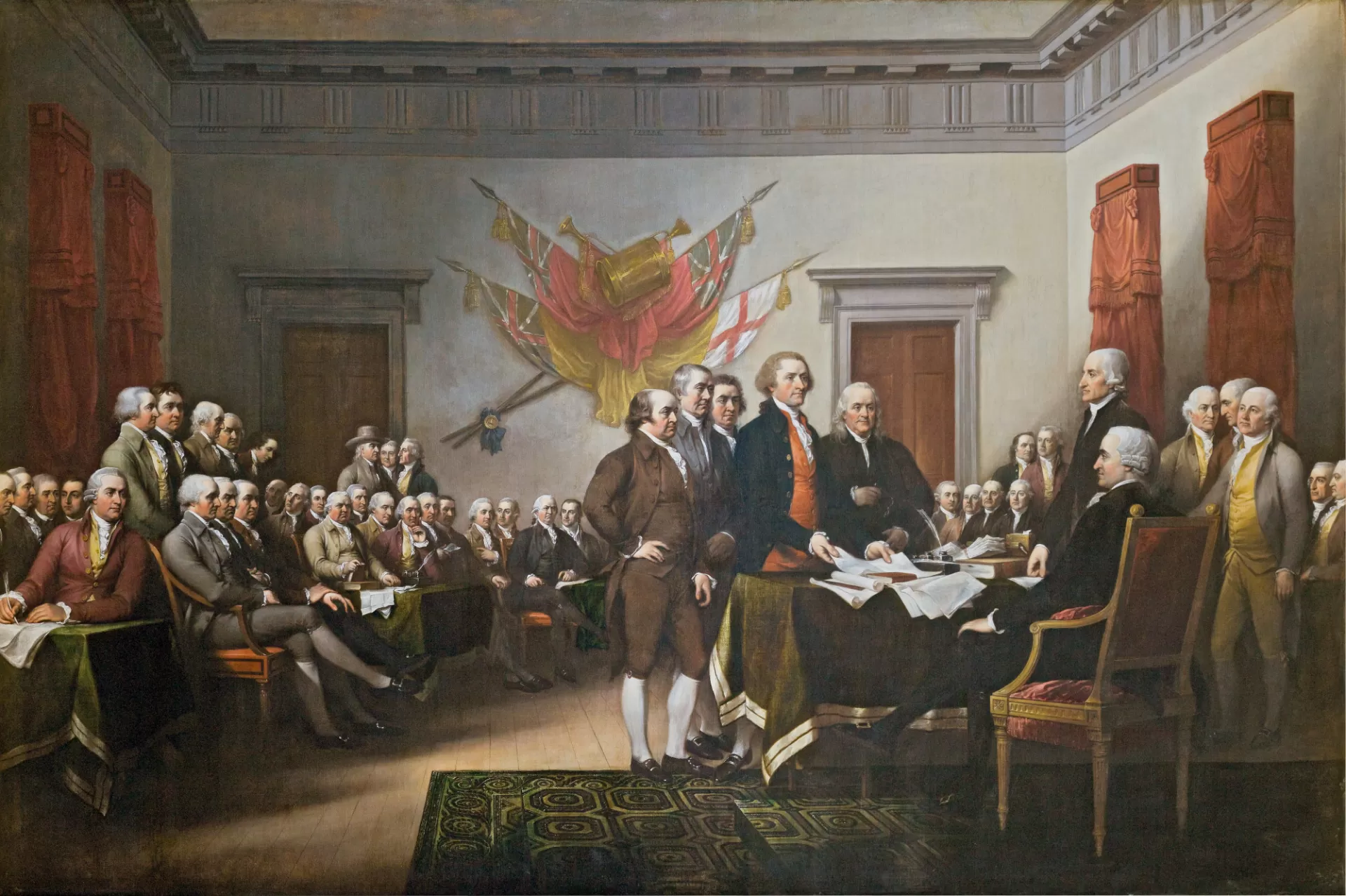
Declaration
On June 28, 1776, five men from the New Jersey colony arrived in Philadelphia. They were Abraham Clark, a lawyer and surveyor from Elizabethtown; John Hart, a large landowner from Hunterdon County; Francis Hopkinson, a lawyer and musician born in Philadelphia; Richard Stockton, a lawyer from Princeton, and John Witherspoon, a Scottish-born minister who settled in Princeton. They had been chosen to represent the colony’s interests in the Second Continental Congress.
On July 2, 1776, these five men agreed to adopt a constitution declaring independence from Great Britain. New Jersey was the fourth American colony to do so.
On July 4, 1776, these five joined fifty-one other Americans in approving and signing a document that stated, in its conclusion, “We, therefore, the Representatives of the United States of America, in General Congress, Assembled, appealing to the Supreme Judge of the world for the rectitude of our intentions, do, in the Name, and by Authority of the good People of these Colonies, solemnly publish and declare, That these United Colonies are, and of Right ought to be Free and Independent States; that they are Absolved from all Allegiance to the British Crown, and that all political connection between them and the State of Great Britain, is and ought to be totally dissolved; and that as Free and Independent States, they have full Power to levy War, conclude Peace, contract Alliances, establish Commerce, and to do all other Acts and Things which Independent States may of right do. And for the support of this Declaration, with a firm reliance on the protection of divine Providence, we mutually pledge to each other our Lives, our Fortunes and our sacred Honor.”
In so doing, these men had all just committed treason against the most powerful political entity in the history of the world.
“Revolution” was underway.